
How the Future of Networking Is Reshaping the Network Engineer Role

Tuesday, November 25, 2025
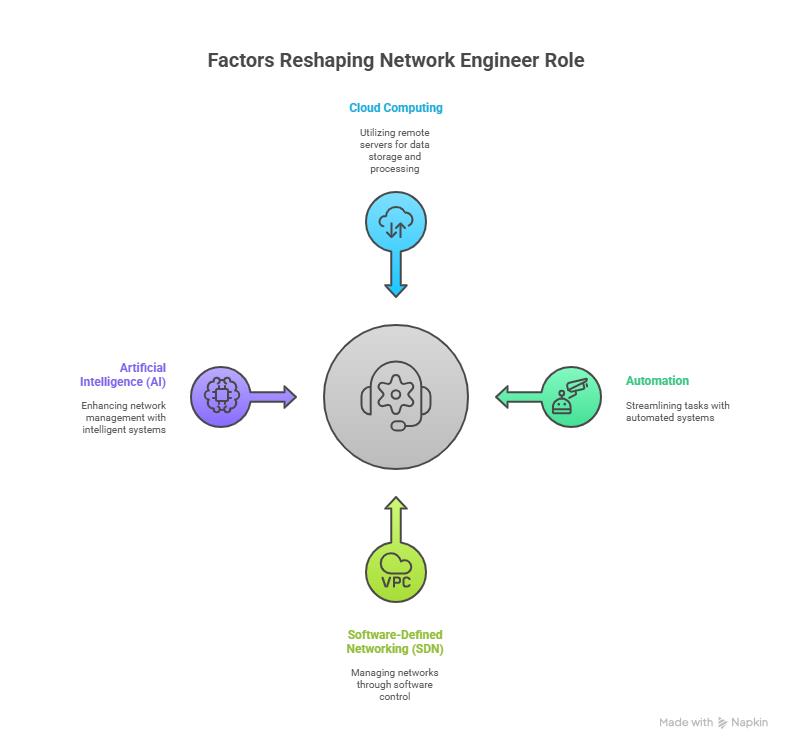
The network engineer role is undergoing a dramatic transformation, driven by rapid advancements in technology and evolving business needs. This article explores how the future of networking, characterized by cloud computing, automation, software-defined networking (SDN), and artificial intelligence (AI), is reshaping the responsibilities, skills, and career paths of network engineers. Understanding these changes is crucial for network engineers to adapt and thrive in the modern IT landscape.
The Evolving Landscape of Networking
The traditional network infrastructure, built on physical hardware and manual configurations, is becoming increasingly outdated. Businesses are demanding more agile, scalable, and cost effective solutions. This demand is fueling the adoption of new networking paradigms:
• Cloud Networking: Moving network infrastructure and services to the cloud offers scalability, flexibility, and reduced operational costs.
• Software-Defined Networking (SDN): SDN separates the control plane from the data plane, enabling centralized management and automation of network resources.
• Network Automation: Automating repetitive tasks, such as configuration, monitoring, and troubleshooting, improves efficiency and reduces human error.
• Artificial Intelligence (AI) and Machine Learning (ML): AI and ML are being used to analyze network data, predict performance issues, and optimize network configurations.
These technologies are not just incremental improvements; they represent a fundamental shift in how networks are designed, deployed, and managed.
The Impact on the Network Engineer Role
The future of networking is significantly impacting the network engineer role, requiring them to acquire new skills and adapt to new responsibilities. Here's how:
1. From Hardware to Software Focus
Traditional network engineers primarily focused on configuring and maintaining physical network devices. The rise of SDN and cloud networking requires a shift towards software centric skills. Network engineers now need to be proficient in:
• Programming Languages: Python, Go, and other scripting languages are essential for automating network tasks and interacting with APIs.
• Infrastructure as Code (IaC): Tools like Terraform and Ansible enable network engineers to define and manage network infrastructure using code.
• Cloud Platforms: Understanding cloud networking concepts and services offered by providers like AWS, Azure, and Google Cloud is crucial.
2. Embracing Automation
Network automation is becoming a core competency for network engineers. They need to be able to:
• Develop Automation Scripts: Create scripts to automate repetitive tasks, such as device configuration, network monitoring, and troubleshooting.
• Use Automation Tools: Leverage tools like Ansible, Chef, and Puppet to manage network infrastructure at scale.
• Implement CI/CD Pipelines: Integrate network automation into continuous integration and continuous delivery pipelines for faster and more reliable deployments.
3. Data Analysis and AI/ML Skills
AI and ML are transforming network management by providing insights into network performance and security. Network engineers need to develop skills in:
• Data Analysis: Analyzing network data to identify trends, anomalies, and potential issues.
• Machine Learning: Understanding ML algorithms and their applications in network optimization and security.
• Network Monitoring Tools: Using tools like Prometheus, Grafana, and ELK stack to monitor network performance and identify anomalies.
4. Enhanced Security Expertise
With the increasing complexity of networks and the growing threat of cyberattacks, network engineers need to have a strong understanding of network security principles and technologies. This includes:
• Firewall Management: Configuring and maintaining firewalls to protect network resources.
• Intrusion Detection and Prevention Systems (IDS/IPS): Implementing and managing IDS/IPS to detect and prevent malicious activity.
• Security Automation: Automating security tasks, such as vulnerability scanning and incident response.
5. Collaboration and Communication
The future of networking requires network engineers to collaborate more closely with other IT teams, such as developers, security engineers, and cloud architects. Effective communication and collaboration skills are essential for:
• Working in Agile Teams: Participating in agile development processes and collaborating with other team members.
• Communicating Technical Concepts: Explaining complex technical concepts to non technical stakeholders.
• Documenting Network Infrastructure: Creating and maintaining documentation for network infrastructure and processes.
Actionable Advice for Network Engineers
To prepare for the future of networking, network engineers should take the following steps:
• Invest in Training: Take courses and certifications in cloud networking, SDN, automation, and security.
• Learn Programming: Master a scripting language like Python or Go.
• Experiment with Automation Tools: Get hands-on experience with automation tools like Ansible and Terraform.
• Build a Lab Environment: Create a lab environment to experiment with new technologies and practice your skills.
• Contribute to Open Source Projects: Contribute to open source networking projects to gain experience and build your reputation.
• Network with Peers: Attend industry events and connect with other network engineers to learn from their experiences.
Conclusion
The future of networking is reshaping the network engineer role, requiring them to acquire new skills and adapt to new responsibilities. By embracing cloud networking, automation, SDN, and AI/ML, network engineers can transform themselves into valuable assets in the modern IT landscape. Investing in training, learning programming, experimenting with automation tools, and networking with peers are essential steps for network engineers to prepare for the future and thrive in their careers. The network engineer of tomorrow is not just a hardware expert but a software-savvy, automation-focused, and security-conscious professional who can drive innovation and deliver business value.

The founder of Network Kings, is a renowned Network Engineer with over 12 years of experience at top IT companies like TCS, Aricent, Apple, and Juniper Networks. Starting his journey through a YouTube channel in 2013, he has inspired thousands of students worldwide to build successful careers in networking and IT. His passion for teaching and simplifying complex technologies makes him one of the most admired mentors in the industry.