
DevOps vs DevSecOps: Which is the Better Career Path?
Thursday, September 26, 2024
The tech industry is just doing fine with DevOps. IT professionals use automation, Continuous Integration and Continuous Development (CI/CD) to shorten the software development lifecycle. This process has benefited the industry in the following ways:
Revved up the process of software development
Increased collaboration between Development (Dev) and Operations (Ops)
Incorporated automation in the software development lifecycle (SDLC)
But you know what is missing? Security.
With millions of security breaches increasing worldwide every day, there is a serious need to incorporate security practices in the software development process.
Introducing DevSecOps, a fresh approach to software development that considers security while practicing DevOps. This means that if a software development team is working on developing software, it is ensured that security is incorporated right into the code while creating it.
This blog introduces you to DevSecOps, how it is different from DevOps, and the various DevSecOps tools currently used in the industry.
Let’s get started.
What is DevOps?
DevOps is a means of establishing a seamless bridge between development and operations teams for the betterment of communication as well as productivity. Before the entry of DevOps, it was difficult for the software development and operations teams to collaborate with each other. It was right when DevOps entered and decreased the timeline of the software development lifecycle.
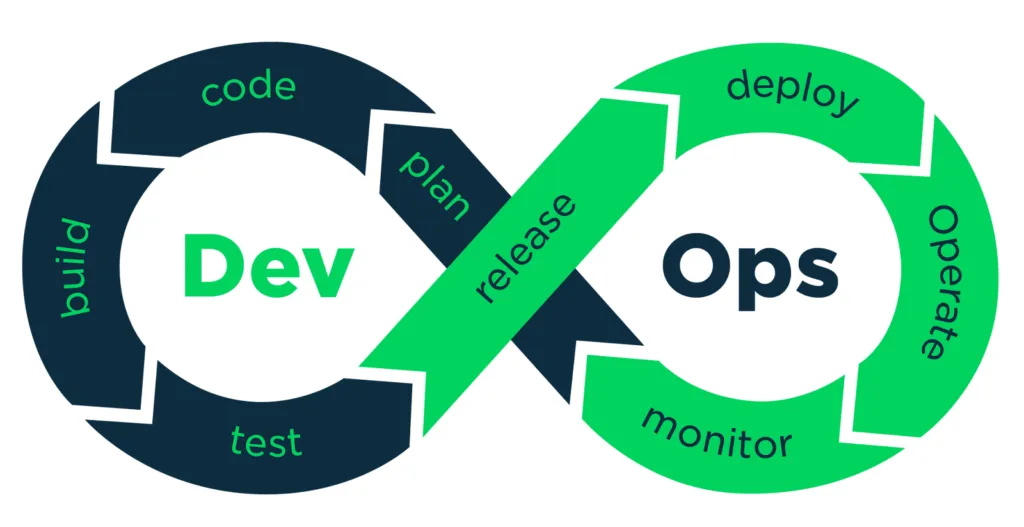
Again, the key point here is to speed up the development cycle with the delivery of high-quality software at a faster pace.
Technology Focus:
Automation, Continuous Integration and Continuous Delivery (CI/CD): It focuses on efficiency through automation in integrating and continuously delivering processes.
Example:
Now imagine the same team developing a website. Under DevOps, the developers write code and work closely together to deploy the site as soon as possible. They will work on tools that automatically test and release updates on the website without delay.
What is DevSecOps?
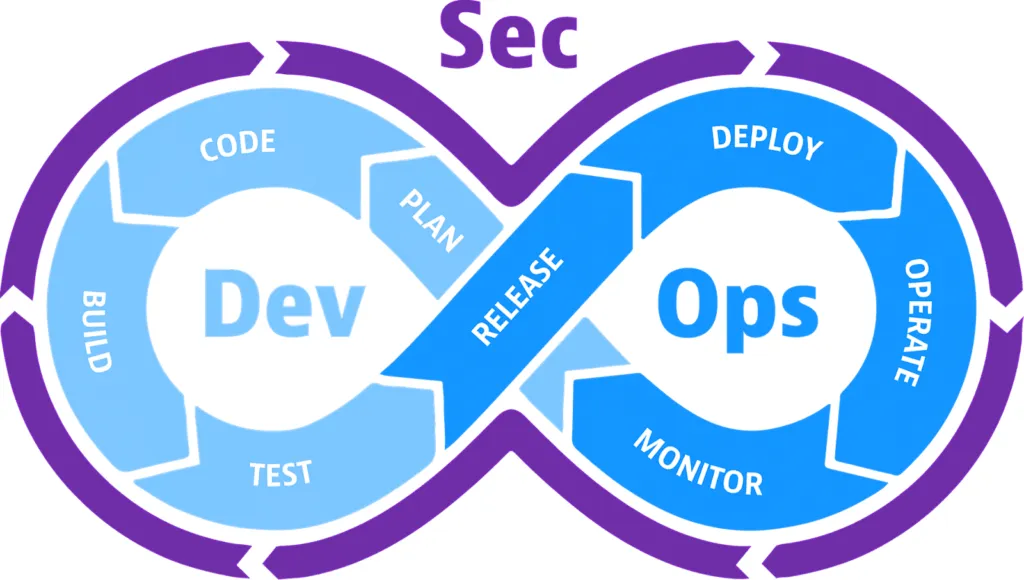
On the other hand, DevSecOps is the new approach. It adds security into the collaboration of software development and operations. It takes security as the backbone of the complete software development and delivery process, and considers it at every stage of the software development lifecycle.
Technology Focus:
DevSecOps emphasizes building security into the development code right from the start rather than adding it later on. Therefore, it considers security as the backbone of the SDLC.
Example:
Once again, let’s use the same example of a website. In DevSecOps, security is involved the whole way through, much like the operations teams do their part while developers code and operations teams are deploying.
They check for vulnerabilities in the code and ensure security tools are integrated within CI/CD pipelines, while continually conducting their security assessments. This way, security measurements are built in, rather than being something done after.
Note:
DevOps simply accelerates delivery through efficient collaboration between development and operations.
DevSecOps makes it possible to add the security dimension to that collaboration and get the software with safety integrated from the very start.
This makes DevSecOps a much more holistic approach in the current context of common security threats.
DevOps vs DevSecOps: Which is the Better Career Choice?
As the need for quick software delivery in organizations is at its peak, career paths in software development and operations have gained significant traction. Among these, DevOps and DevSecOps stand out as popular choices. While both aim to enhance collaboration between development and operations teams, they differ in their approach to security.
Let’s explore the key differences and help you decide which path might be better for you.
DevOps:
1. Tools & Technologies:
Includes tools like Jenkins, Docker, Kubernetes, and Git for automation and orchestration.
Note: If you want to learn more about these tools, you can check out the in-depth blog here.
2. Prerequisites to Become a DevOps Professional:
Educational background: It is preferable to have a graduate degree in Computer Science or a related degree.
Other requirements: It is good to have basic knowledge of networking and/or cybersecurity. Even programming language knowledge is beneficial.
3. Advantages of a Career in DevOps:
Widespread Adoption: Many organizations are adopting DevOps practices, leading to numerous job opportunities.
High Demand for Skills: Skills in CI/CD, cloud technologies, and containerization are highly sought after. The average salary of a DevOps Engineer is ₹ 7.57 LPA.
4. Job Opportunities:
DevOps Engineer
Site Reliability Engineer (SRE)
Release Manager
Cloud Engineer
Automation Engineer
Systems Administrator
Infrastructure Engineer
CI/CD Engineer
Technical Support Engineer
DevSecOps:
1. Tools & Technologies:
Utilizes security tools like Snyk, Aqua Security, and HashiCorp Vault alongside traditional DevOps tools.
2. Prerequisites to Become DevSecOps Professional:
Educational background: It is better to have a degree in Computer Science to gain an edge in the industry. However, it is not essential to have one.
Other requirements: It is essential to have DevOps knowledge before learning about DevSecOps.
3. Advantages of Career in DevSecOps:
Growing Emphasis on Security: With increasing cyber threats, organizations are prioritizing security, making DevSecOps professionals invaluable.
Higher Salary Potential: Due to the specialized nature of the role, salaries can be higher compared to traditional DevOps positions. An average DevSecOps Engineer earns ₹ 13.71 LPA.
4. Job Opportunities:
Cloud Security Engineer
Security Architect
Site Reliability Engineer (SRE)
Compliance Analyst
Incident Response Specialist
Threat Intelligence Analyst
Penetration Tester
DevOps Engineer
Application Security Engineer
Cybersecurity Consultant
What are the Best DevSecOps Tools?
Here are the top best DevSecOps tools, along with a brief on each of them:
1. Snyk
Vulnerability Fixing and Identification of Open Source Libraries
Snyk integrates with CI/CD pipelines and the development environment.
Snyk also provides real-time alerts for vulnerabilities found in real-time.
In addition, this DevSecOps tool offers detailed remediation guidance.
Secrets and sensitive data are managed, with access assured.
Generates dynamic secrets for applications across different services.
Supports encryption of data at rest as well as in transit
Offers centralized access policies.
2. Twistlock (now Prisma Cloud)
Containers with a cloud-native application have full security available. Supports vulnerability management, compliance checking, and runtime defense.Can be integrated with the CI/CD tools. Thus, it ensures automatic checks on security with runtime behavior monitoring for the detection of anomalies.
3. SonarQube
Analysis of the quality as well as security issues on several programming languages.
Provides static code analysis for bugs and code smells.
Integrates with CI/CD tools to conduct continuous inspections.
Generates rich reports and dashboards to track issues
4. OWASP ZAP (Zed Attack Proxy)
A free, open-source web application security scanner.
May assist in discovering various security weaknesses in your web applications while they are still under development.
It offers you automated scanning functionality with manual testing tools.
Integrate it with your CI/CD pipelines to get regular security checks on your applications.
5. Checkmarx
Static application security testing (SAST) focuses.
Scans source code for security vulnerabilities early in the development cycle.
Produces detailed reports and remediation guidance.
Supports a wide range of programming languages and frameworks.
6. GitLab
These have built-in security features like vulnerability scanning and dependency scanning.
Source code management, CI/CD, and security available from a single platform.
Allows checks to be automated as part of the development workflow.
Provisions compliance management and reporting tools.
7. Terraform
IaC service. One can use it to provision secure infrastructure.
Supports policy as code, which applies security controls to infrastructure.
Integrate with multi-cloud providers for a uniform security practice.
Act as version control for the infrastructure configuration.
8. Kubernetes Security Tools (e.g., Kube-bench, Kube-hunter)
Kube-bench checks Kubernetes clusters against CIS security benchmarks.
Kube-hunter performs penetration testing on Kubernetes clusters to identify vulnerabilities.
Provide insight into cluster settings for misconfiguration or weakness identification
Support compliance activities by providing actionable insight.
All these altogether improve the security posture of development processes by integrating security practices into the software development lifecycle.
Conclusion
In summary, the evolution from DevOps to DevSecOps reflects the growing importance of security in the software development lifecycle. While DevOps focuses on enhancing collaboration and streamlining processes, DevSecOps integrates security practices at every stage, ensuring robust protection against vulnerabilities.
As organizations increasingly prioritize security, understanding the differences between DevOps vs DevSecOps becomes crucial for career development. Familiarity with essential DevSecOps tools, such as Snyk, Twistlock, and SonarQube, can significantly enhance your value in the tech industry, making you a vital asset in the fight against cyber threats.
FAQs:
What is the difference between DevOps and DevSecOps?
DevOps improves collaboration and efficiency between development and operations teams; DevSecOps incorporates security best practices all along the software development lifecycle, so security is considered from early on.
What are the most popular tools used in DevSecOps?
Some of the key tools are Snyk for vulnerability management, Twistlock (Prisma Cloud) for container security, SonarQube for code quality and security analysis, OWASP ZAP for web application security scanning, and Checkmarx for static application security testing.
What kind of education is recommended to become a professional in DevOps or DevSecOps?
Ideally, a Computer Science or any related field, but knowledge of networking, cybersecurity, and programming languages is also good.
What is the average salary of a DevOps and DevSecOps engineer?
DevOps Engineer ₹7.57 LPA, while a DevSecOps Engineer could be drawing a decent average of around ₹13.71 LPA because of the specific nature of the job.
Why is DevSecOps becoming highly important in the tech industry?
With the growing cyber threats and increased security breaches, organizations are currently implementing and even considering security in their software development processes. DevSecOps involves incorporating security into every phase of development, making it indispensable against vulnerabilities.

The founder of Network Kings, is a renowned Network Engineer with over 12 years of experience at top IT companies like TCS, Aricent, Apple, and Juniper Networks. Starting his journey through a YouTube channel in 2013, he has inspired thousands of students worldwide to build successful careers in networking and IT. His passion for teaching and simplifying complex technologies makes him one of the most admired mentors in the industry.